
Understanding Contingent Real Estate: What Every Buyer and Seller Needs to Know
What does contingent mean in real estate? In real estate, “contingent” means a seller has accepted an offer, but the sale is conditional on specific requirements being met. If these conditions (contingencies) aren’t satisfied, the buyer can typically walk away from the deal with their earnest money deposit.
Quick Answer:
- Contingent Status: The property is under contract, but conditions must be met.
- Common Contingencies: Home inspection, financing, appraisal, and title search.
- Buyer Protection: Allows the buyer to exit the deal if contingencies fail.
- Seller Impact: The property is off the market, but the sale isn’t guaranteed.
- Timeline: Contingencies usually last from 7 to 30 days.
When browsing home listings, you’ve likely seen properties marked as “contingent.” This term can be confusing, as it sits between an active listing and a completed sale. A contingent listing means the seller has accepted an offer, but the deal isn’t final. Think of contingencies as safety nets that protect buyers from unexpected issues while assuring sellers the buyer is serious.
According to the National Association of Realtors, about 5% of purchase agreements fall through before closing, often due to unmet contingencies. This highlights the importance of these protections, with 67% of buyers including inspection contingencies and 61% adding financing contingencies to their offers.
Understanding this status is crucial for buyers considering a backup offer and for sellers weighing an offer with multiple contingencies.
What Does Contingent Mean in Real Estate? A Detailed Definition
Let’s dive deeper into what does contingent mean in real estate and why it matters in your home buying or selling journey.
When a property is “contingent,” a buyer and seller have agreed to a deal, but key conditions remain. It’s like a job offer that’s contingent on a background check—the offer is real, but not yet final.
The purchase agreement is the legal document that outlines these specific conditions. Both parties sign, agreeing that the sale is dependent on these terms being met before it becomes official.
As part of the offer, a buyer provides an earnest money deposit—typically 1% to 3% of the purchase price—as a show of good faith. This money is held in an escrow account.
If a contingency isn’t satisfied, you can walk away with your earnest money intact. However, backing out for a reason not covered by a contingency usually means forfeiting the deposit. This system protects buyers from legitimate issues while assuring sellers of the buyer’s commitment.
While the terms “under contract” and “contingent” are similar, “contingent” specifically highlights that conditions must still be cleared before the sale can proceed.
These protections are essential. Data shows that 5% of purchase agreements are terminated before closing, often saving buyers from costly mistakes. Buying a home has many moving parts, and contract conditions give everyone breathing room to ensure the deal is sound before it becomes final.
If you’re just starting your home buying journey, understanding these fundamentals will serve you well. Our comprehensive First-Time Homebuyer Tips guide walks you through these concepts and many others to help you feel confident throughout the process.
The Most Common Types of Real Estate Contingencies
Understanding what does contingent mean in real estate requires knowing the specific conditions involved. These contract clauses are your safety checkpoints during the due diligence period, creating negotiation points and keeping the process on track. Most contingencies last from one week to a month.

The Home Inspection Contingency
This contingency is like a physical for the house. Within a standard 7-10 day period, a professional inspector looks for issues with the foundation, roof, plumbing, electrical, and HVAC systems. If significant problems are found, you can ask the seller for repairs, negotiate for credits, or walk away with your earnest money. While 67% of buyers use this contingency, some waive it in competitive markets—a risky move that could lead to unexpected repair bills. For more guidance, see our Easy Steps to Buying Your First Home.
The Financing or Mortgage Contingency
Unless you’re paying cash, this contingency protects you if your loan falls through. It typically gives you 21-30 days to secure final loan approval. During this time, the lender verifies your income, credit, and debt. If your loan is denied, this buyer financial protection lets you back out without losing your earnest money. Given that 61% of buyers rely on this contingency, it’s a crucial safeguard even if you have a pre-approval letter. Learn more in our guide on Understanding Mortgages: A Beginner’s Guide to Home Loans.
The Appraisal Contingency
Lenders require an appraisal to ensure they aren’t lending more than the home is worth. This property valuation process protects you and the lender. If the appraisal comes in low, you can ask the seller to lower the price, pay the difference in cash, or walk away. Data shows 7% of sales get delayed due to appraisal issues, yet 24% of buyers waive this contingency, risking the need to cover an appraisal gap out-of-pocket. Our Competitive Market Analysis Real Estate guide can help you understand local values.
The Home Sale Contingency
This allows buyers to make their purchase conditional on selling their current home, protecting them from holding two mortgages. Sellers are often wary of this contingency and may counter with a kick-out clause. This clause lets them continue marketing the home and accept a non-contingent offer if one comes in, giving you a short window (24-72 hours) to remove your contingency or step aside. Our The Ultimate Guide to Selling Your Home: Tips, Timelines, and Tools can help you manage this process.
The Title Contingency
This contingency ensures the seller has the legal right to sell the property. A title search uncovers any liens, unpaid taxes, or ownership disputes. Identifying liens and encumbrances is crucial to avoid inheriting financial or legal problems. If issues with the title can’t be resolved before closing, you can safely exit the deal. For more details, read our guide on Understanding Title Insurance.
Contingent vs. Pending: Understanding the Key Differences
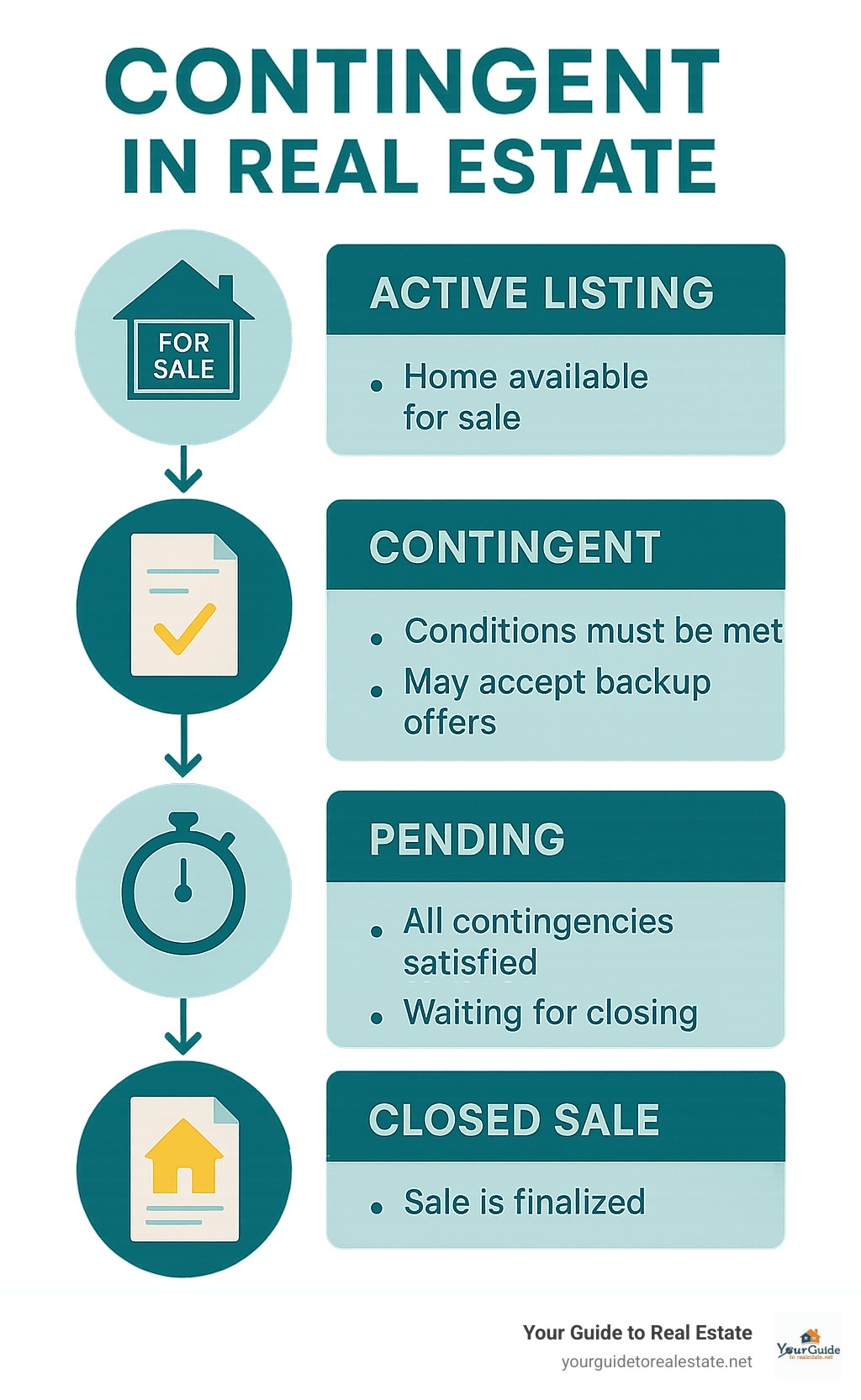
Once a property is under contract, its status evolves. While “contingent” and “pending” both mean the home is off the active market, they represent different stages of the sale.

If what does contingent mean in real estate is like an engagement with conditions, then pending is like setting the wedding date. A contingent listing has an accepted offer, but the deal still depends on contingencies like inspection or financing. The deal can still fall through.
When a property moves to pending, all contingencies have been met or waived. Everyone is now focused on the final paperwork and closing. A pending deal is much more certain and very likely to close.
Key Distinctions for Buyers and Sellers
Here’s what these statuses mean for you:
| Feature | Contingent | Pending |
|---|---|---|
| Conditions to Meet | Yes – inspection, financing, appraisal, etc. | No – all contingencies are cleared. |
| Backup Offers | Often accepted, especially with kick-out clauses. | Rarely accepted. |
| Deal Certainty | Lower – can fall through if contingencies fail. | High – very likely to close. |
| Market Status | Sometimes shown for backup offers. | Off the market; no more showings. |
| Buyer Protection | Strong – earnest money is protected by contingencies. | Limited – backing out risks the earnest money. |
| Seller Flexibility | Higher – can use kick-out clauses to accept better offers. | Low – legally committed to the current buyer. |
Can You Make an Offer on a Contingent or Pending Home?
Yes, you can make a backup offer on both, but your chances of success differ greatly.
Sellers often welcome backup offers on contingent properties because about 5% of deals fall through. If the primary buyer’s financing or inspection fails, your backup offer can move into first place. This is especially true for homes with a home sale contingency and a kick-out clause, which allows the seller to accept a better offer.
Pending properties are much harder to secure with a backup offer. Since all contingencies are cleared, the deal is very likely to close. While last-minute issues can rarely derail a sale, your odds are low.
An experienced agent can help you craft a compelling backup offer and identify which contingent deals are most likely to fall through. Our guide on How to Choose the Right Real Estate Agent: A Complete Buyer’s Guide can help you find an expert for these situations.
Navigating Contingencies: A Guide for Buyers and Sellers
Once you understand what does contingent mean in real estate, the next step is learning how to manage these situations. Whether you’re buying or selling, contingencies require a smart strategy.

For Sellers: What does contingent mean in real estate for your sale?
Accepting a contingent offer expands your buyer pool, as many qualified buyers need these protections. It also signals that your home is desirable, which can create urgency and attract backup offers.
However, the main downside is uncertainty. A contingent deal can fall apart weeks later, and your home gets less attention from new buyers during this period. You may also face further negotiations over inspection issues or a low appraisal.
A kick-out clause is your best friend here. It allows you to accept a contingent offer while still marketing your home. If a non-contingent offer appears, the original buyer has a short window (usually 24-72 hours) to remove their contingency or walk away. An experienced agent can help you evaluate offers; our guide on How to Choose a Selling Real Estate Agent shows you how to find one.
For Buyers: Should you waive contingencies to be more competitive?
In competitive markets, buyers are often tempted to waive contingencies to make their offer stronger. However, this means you’re buying the home “as-is” and taking on significant financial risks.
- Waiving the inspection contingency means you’re responsible for any hidden defects, no matter how costly.
- Waiving the appraisal contingency means you must pay the difference in cash if the home appraises for less than your offer.
- Waiving the financing contingency commits you to the purchase even if your loan is denied, likely costing you your earnest money.
Recent data shows 24% of buyers waived the appraisal contingency and 20% waived inspection. While this can win bidding wars, you must honestly evaluate your risk tolerance. If you have the financial cushion for major repairs or appraisal gaps, it might be a calculated risk. Otherwise, these protections are crucial.
How often do contingent offers fall through, and why?
While most deals close, it’s wise to know the potential pitfalls. According to the National Association of Realtors, about 5% of purchase agreements are terminated before closing, and 12% of sales face delays.
The most common reasons deals fall through are:
- Financing Problems: A change in the buyer’s financial situation can derail a loan, even with pre-approval.
- Inspection Issues: Major defects like foundation or roof problems can lead to failed negotiations over repairs.
- Appraisal Gaps: If the home appraises for less than the offer price and no agreement can be reached, the deal may collapse.
Understanding these common failure points helps you set realistic expectations. For more on market trends, see our U.S. Housing Market Update 2025: Prices, Inventory, and Buyer Behavior.
Frequently Asked Questions about Contingent Real Estate
We’ve gathered the most common questions about what does contingent mean in real estate to give you simple, straightforward answers.
What is a kick-out clause and how does it work?
A kick-out clause is a seller’s safety net when accepting an offer with a home sale contingency. It allows the seller to continue marketing their property and accept a stronger, non-contingent offer if one comes along. When this happens, the original buyer is given a short period (usually 24 to 72 hours) to either remove their contingency and proceed with the purchase or “get kicked out” and allow the new buyer to take their place. This protects sellers from being tied to an uncertain deal.
What is the difference between a contingent and a pending listing?
This is a common point of confusion. In short:
- Contingent: An offer is accepted, but the deal depends on certain conditions (contingencies) being met. The deal is not yet certain.
- Pending: All contingencies have been met or waived. The sale is now very likely to close, and the property is in the final stages before the transaction is complete.
Think of contingent as “we’re working on it,” while pending means “we’re almost done!”
How long do contingencies typically last?
Timelines are negotiable but generally fall within these ranges:
- Home Inspection Contingency: 7 to 10 days. This gives the buyer time to conduct an inspection and review the report.
- Financing Contingency: 21 to 30 days. This allows enough time for the lender to complete underwriting and give final loan approval.
- Appraisal Contingency: This usually runs concurrently with the financing period, as the appraisal is part of the loan process.
- Home Sale Contingency: This is the most variable, lasting anywhere from 30 to 90 days, depending on local market conditions and what’s agreed upon in the contract.
Conclusion
Understanding what does contingent mean in real estate is key to grasping one of the most important safeguards in any transaction. Contingencies aren’t scary legal jargon; they are thoughtful protective measures for both buyers and sellers.
For buyers, they provide a crucial opportunity to perform due diligence. For sellers, they represent a serious commitment from a buyer. Knowing how they work gives you the confidence to make strategic decisions, whether you’re a buyer considering a backup offer or a seller evaluating a complex one.
Every contingent listing tells a story. By understanding the plot, you are better prepared to steer the twists and turns of a real estate deal and align your actions with your goals.
At Your Guide to Real Estate, we believe informed buyers and sellers have more successful and less stressful experiences. Understanding contingencies is a cornerstone of that knowledge.
Ready to dive deeper into property values and market analysis? Learn more about property values with our guide on Valuation and Market Analysis in Real Estate to continue building your real estate expertise.